
Re-imagining the Workforce Experience- The City of Kingston, Ontario
The City of Kingston aimed to provide a single, central source of information for job opportunities in Kingston and its environs. To achieve this, the City purchased a new job board solution from WE Workforce. The project goal was to improve the experience for passive job seekers, who are already employed but exploring new career paths.
Company
The City of Kingston
Industry
Public Sector
UX Research & Design
Desktop and Responsive Design
2 other UX Designers
2 months (2020)
Challenge
The primary user persona was the passive job seeker—individuals like Tyler, a content UX designer who stays updated on the job market for new challenges. The team needed to understand this user group's pain points and design a job board that addressed them.
Results
The redesigned web platform was highly successful, featuring a clean, simplified interface with improved navigation that accurately reflects both user and business needs. The final design demonstrated a 62% improved user experience over the initial WeWorkforce platform and achieved a remarkable 93 System Usability Score.
Furthermore, the successful addition of the Map view feature significantly enhanced the job exploration experience for the passive job seeker persona.







62%
Improved onboarding process with redesign
6.3
Completion Rate
93
System Usability Score
Discovery Phase
Key Problems Identified Through Interviews, Competitive Scan and Heuristic Analysis
Time Constraints: Passive job seekers have limited time to dedicate to job searching.
Ineffective Search: Searching by job titles often fails to yield desired results, and most job boards do not adequately focus on skill sets.
Inconsistency and Overwhelm: Different job boards have varying navigation structures, which is overwhelming for users moving between sites.
Platform Issues (Heuristic Analysis):
Lack of consistency and standards across existing pages.
No feedback or control provided to users when taking action.
A specific technical issue with the "Careers" page scroll causing the page to zoom in.
Persona
Tyler is a UX designer who is passively seeking employment. He has been working at his current company for the past two years and is fairly content with his position. However, he keeps in touch with the job market and constantly seeks new challenges.
Tyler wants an opportunity that matches his skills and offers enough challenges to teach him something new. He also wants to monitor the job market and trends to ensure that he knows any new skills employers seek.
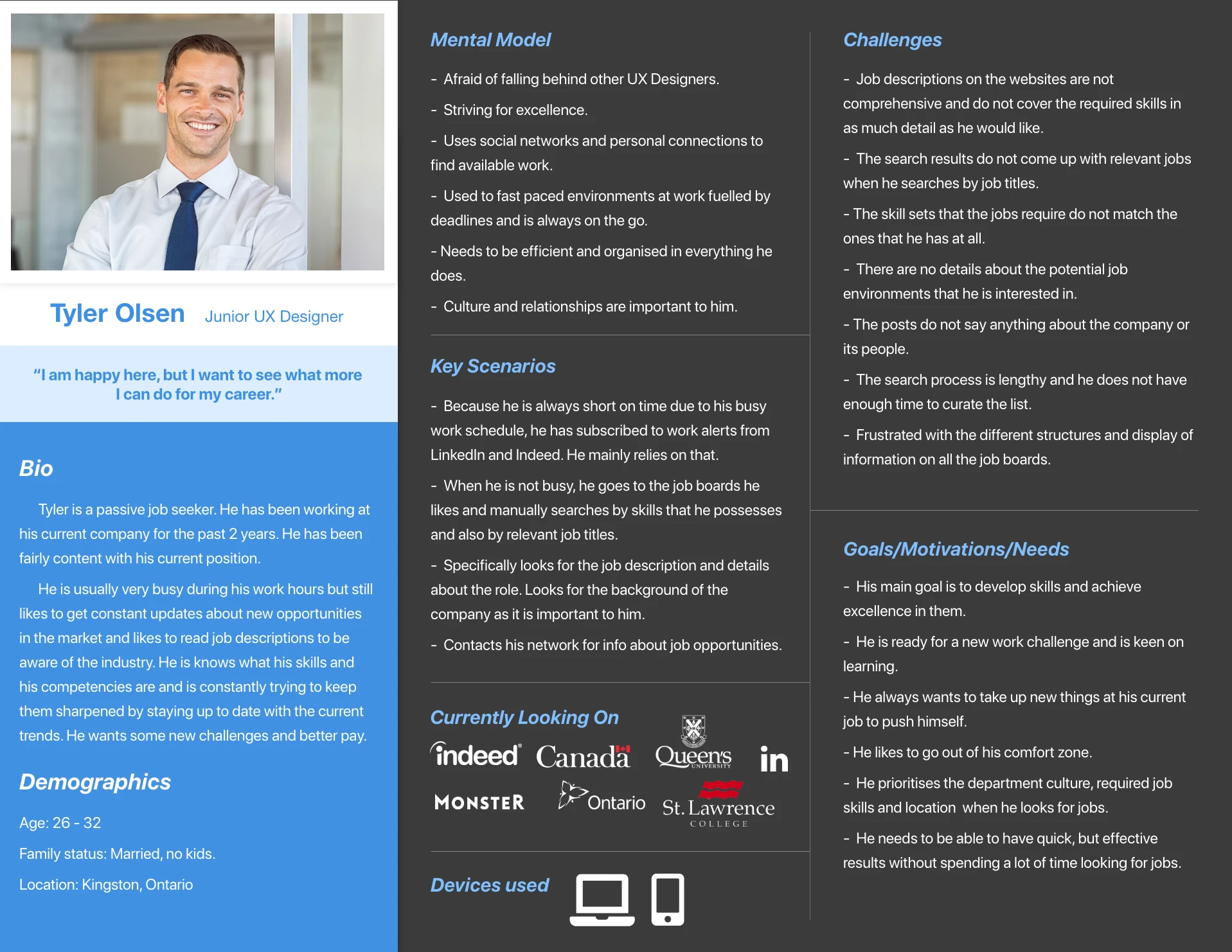
Passive job seeker persona
Customer Journey
Following the persona development, the team created a journey map based on the existing job boards to understand job seekers' processes.
The team created individual journey maps and collaborated to develop a group journey map, which was combined as per the below. The journey map was created based on interviews, competitive analysis, and persona details.
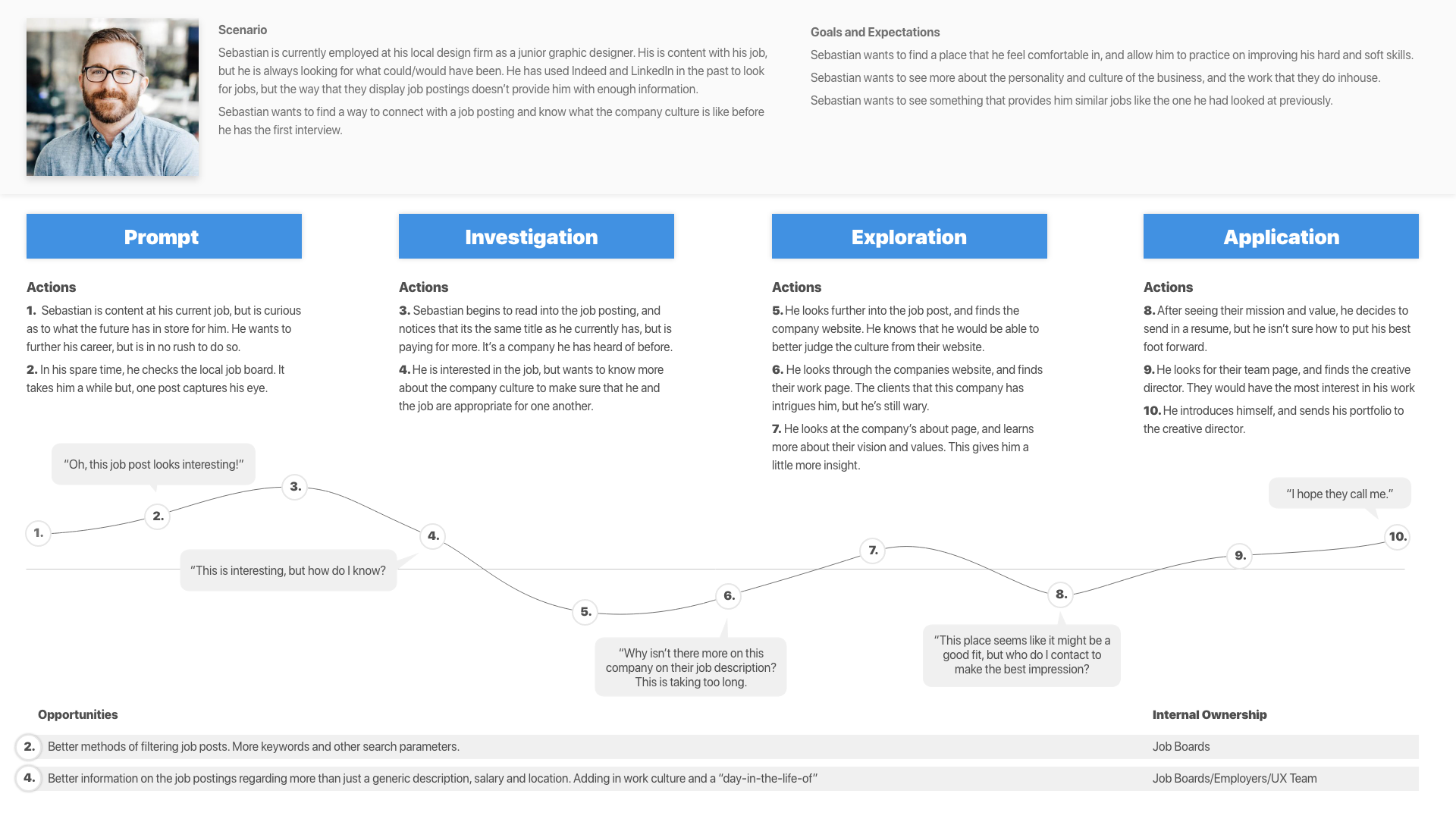
Passive job seeker journey map
Card Sort Analysis
Card sorting helped us understand potential users' challenges and experiences with the website's navigation and labels.
We set up a card-sort test in Optimal Workshop to validate the updated sitemap we created. This test was conducted with 5 participants, and the test results were as follows: Based on participants' responses, the following change was made to the information architecture. The following are the decisions made:
'Resume help' moved to 'Resources.'
'Upgrade Your Skills' moved to 'Resources.'
'Employment Help' moved to 'Resources.'
'Blogs and Videos' moved to 'News and Reports'
Removed 'Hiring Help'. The 'Data Hub' link will include the data needed for employers.
'Success Stories' moved to 'About.'
'Our Funded Projects' moved to 'About'
'Positioning Women for Success' was removed as it is a specific initiative taken up by Workforce for Windsor Essex. The page primarily covers reporting and data. This was removed because it was irrelevant to Kingston's website.
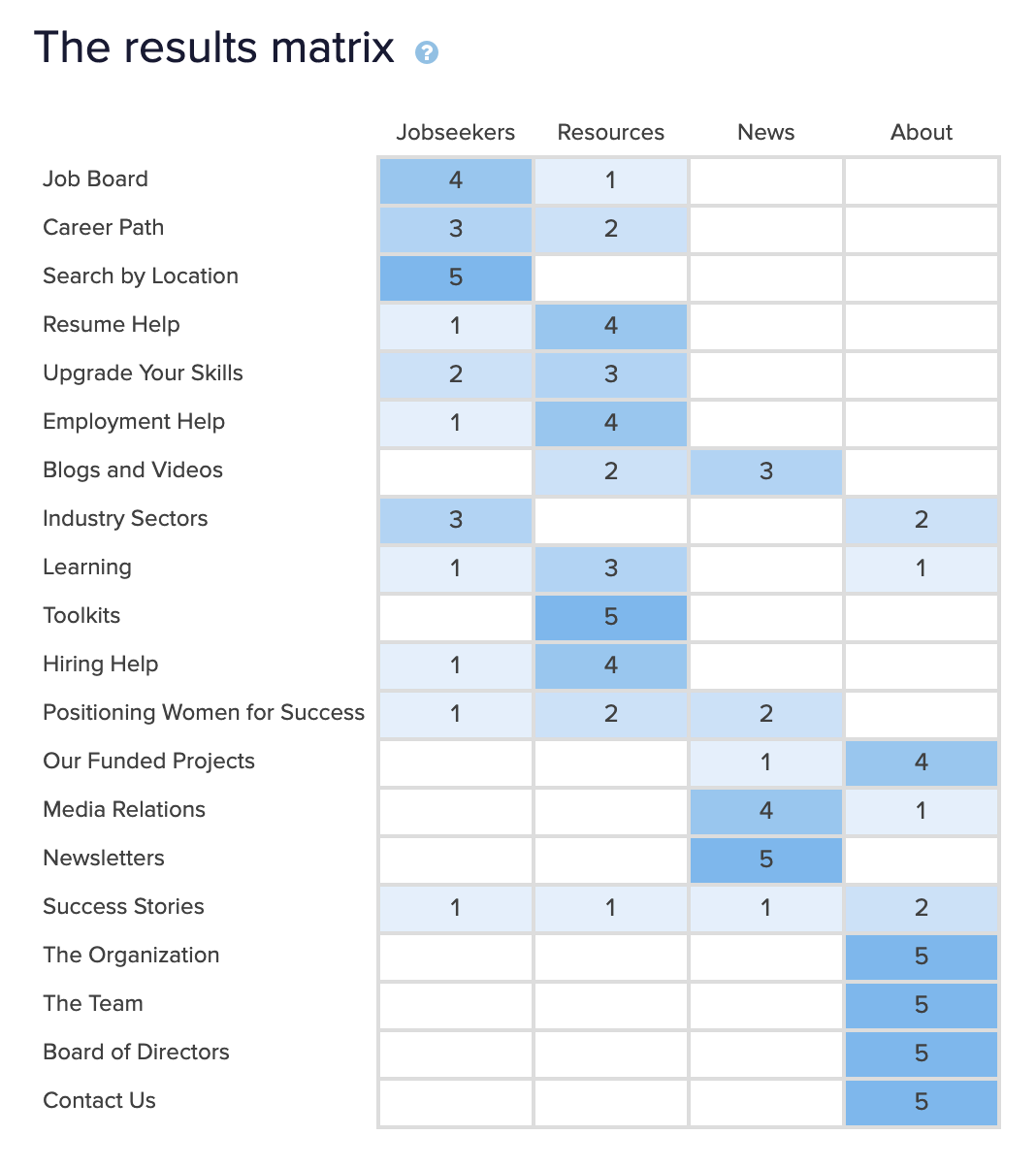
Card sort result matrix
Usability Testing
The goal was to understand how users interact with the City of Kingston's reference website. The participants interviewed were already employed and passively looking for other opportunities. They were also residents of Kingston, Ontario. These test sessions allowed the team to interact with participants and gather further feedback that the survey may not have provided.
Insights from the usability test informed the design recommendation
There is no consistency or standards across the pages.
The site offers the user no control or freedom.
No feedback is provided to users when they take action on the site.
The scroll on the Careers page is not responsive, and when a user scrolls up, the page zooms in.
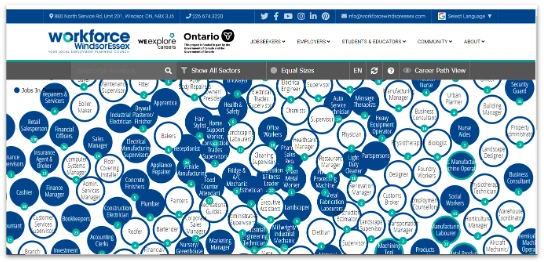
Screenshot from the Workforce platform. The platform the City of Kingston purchased and was adapting.
Design Phase
Wireframes
At the beginning of the design process, the team divided the screens and created low-fidelity prototypes using Adobe XD. These screens were evaluated during team critique sessions. Based on our persona, the design was kept simple and intuitive.
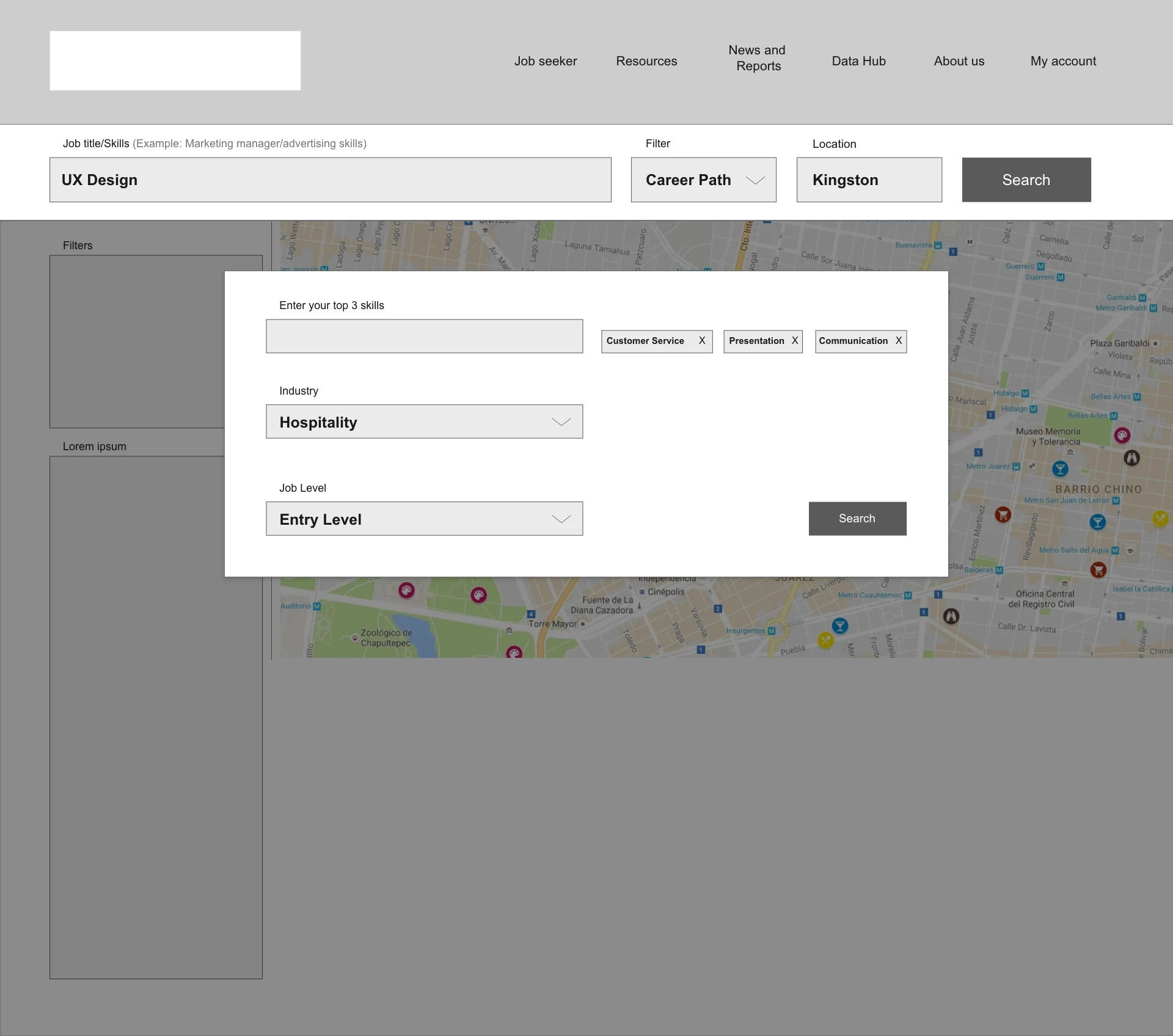
High Fidelity Prototype & Design Decision
Once the low-fidelity prototype was validated based on research findings and critique sessions, the team designed high-fidelity prototypes while keeping the persona and research findings in mind. Screens were created in Adobe XD. The following were our design guiding principles:
Intuitive Navigation: The design adopted a top-down, hierarchical navigation style (parent-child relationship) to align with users' mental models and help them quickly find content.
Universal Design: The team integrated icons from Google Material Design to support users' mental models.
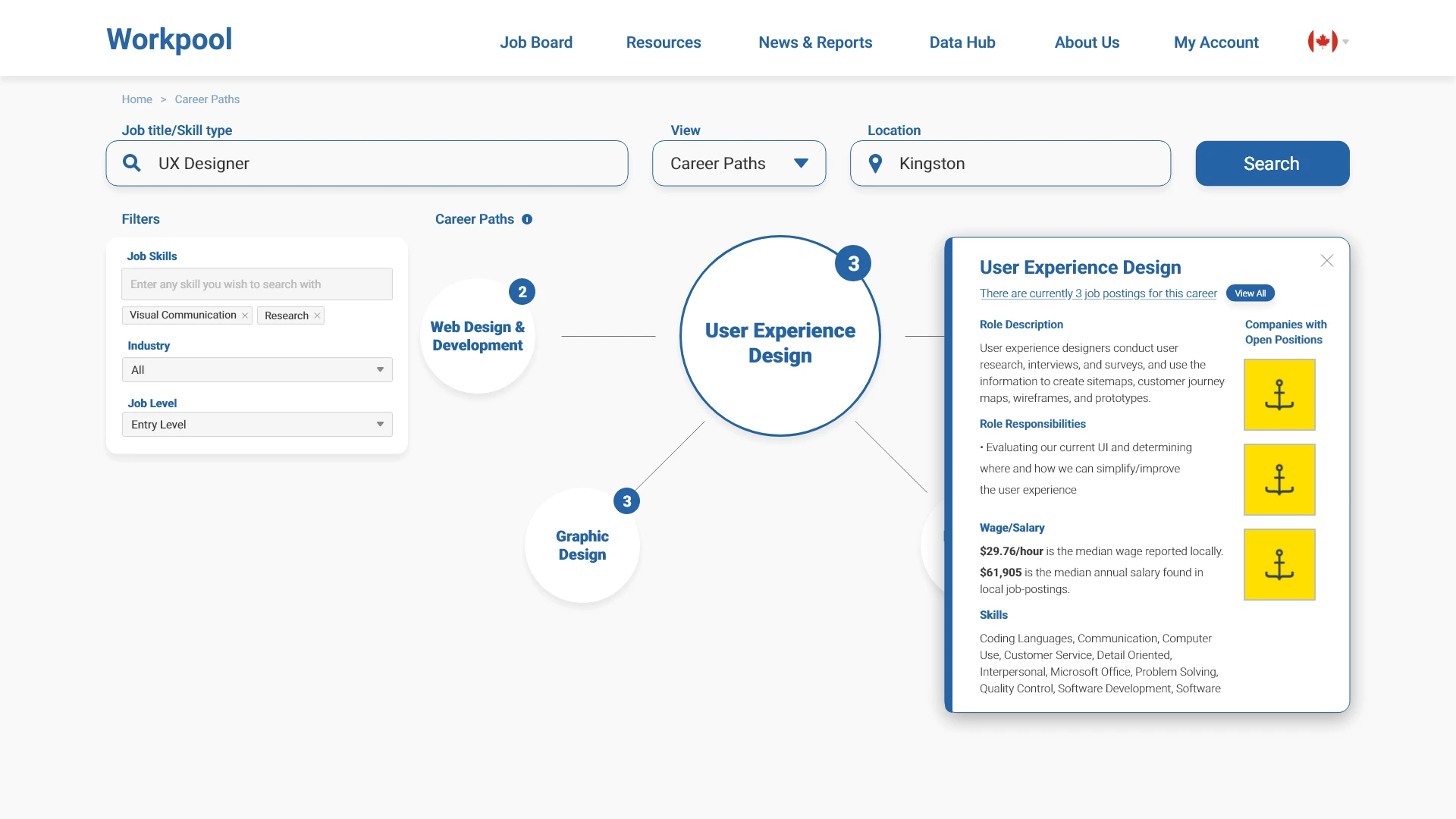
Career Path View Iteration: A key insight from the validation usability test (a moderated, in-person test with 6 participants) was confusion with the initial career path view. The team iterated on this design, using circles and lines to connect different career paths to a user's selected job title, making it more straightforward and intuitive.
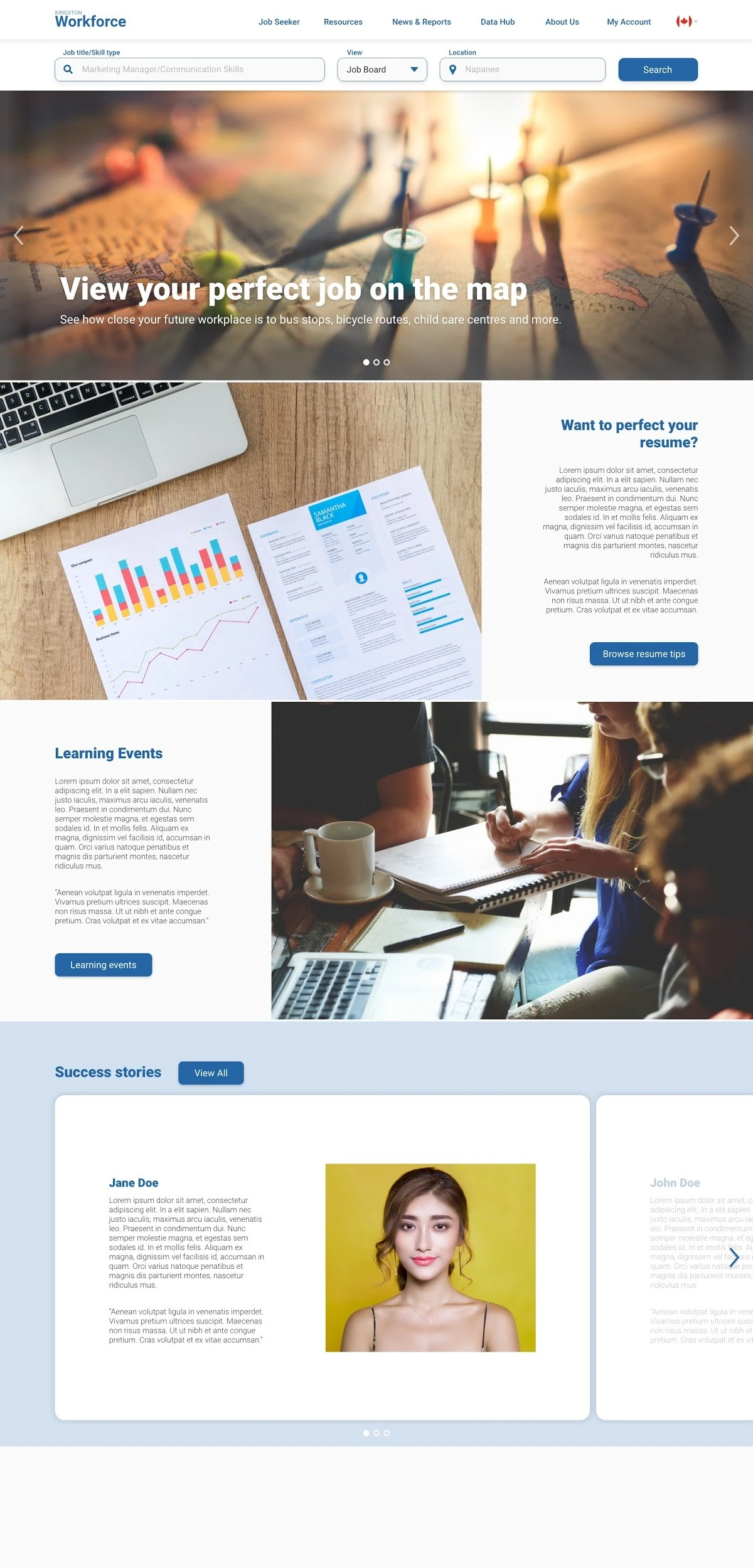
Homepage high fidelity design


Job Board View
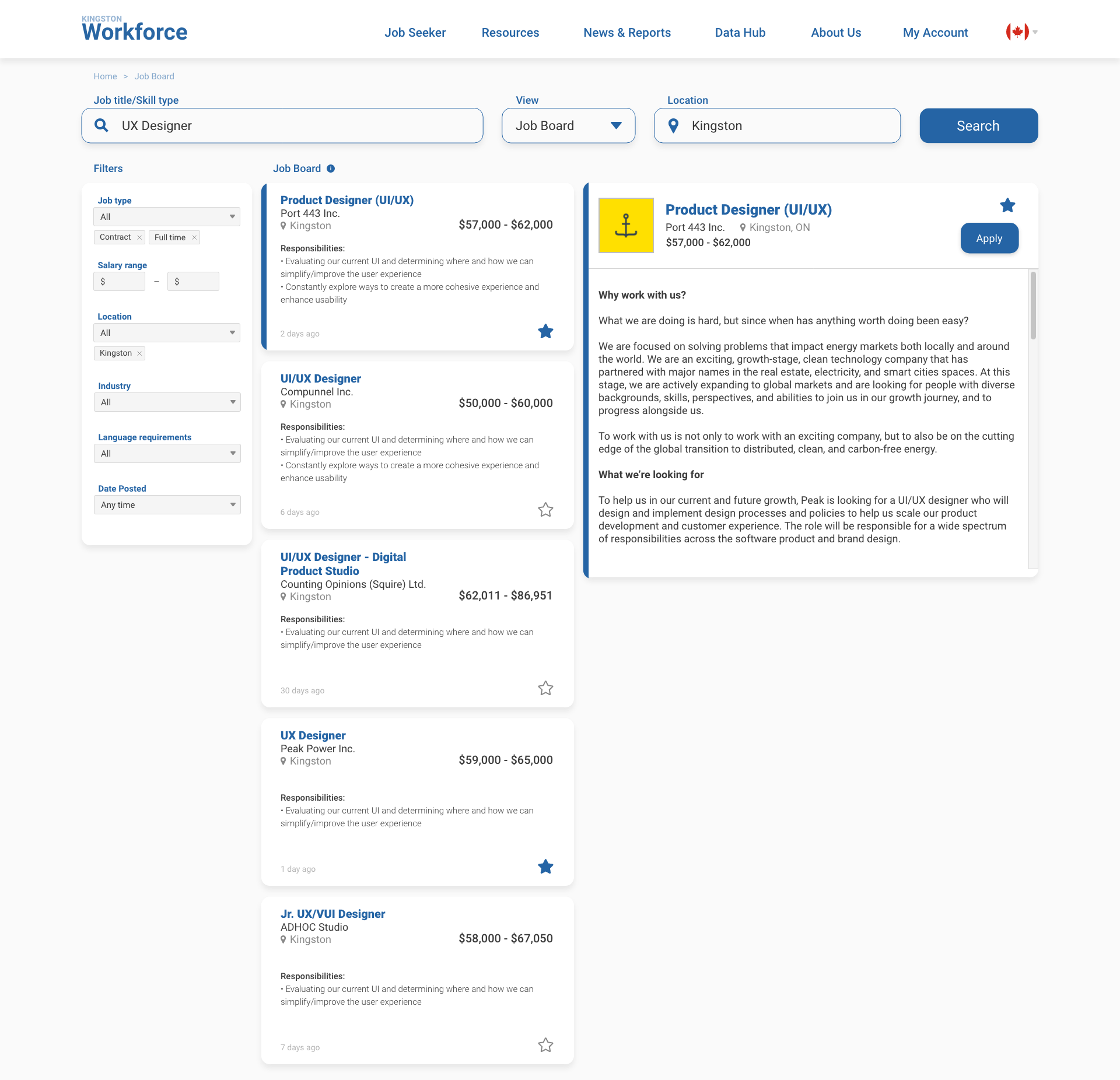
Job Board View
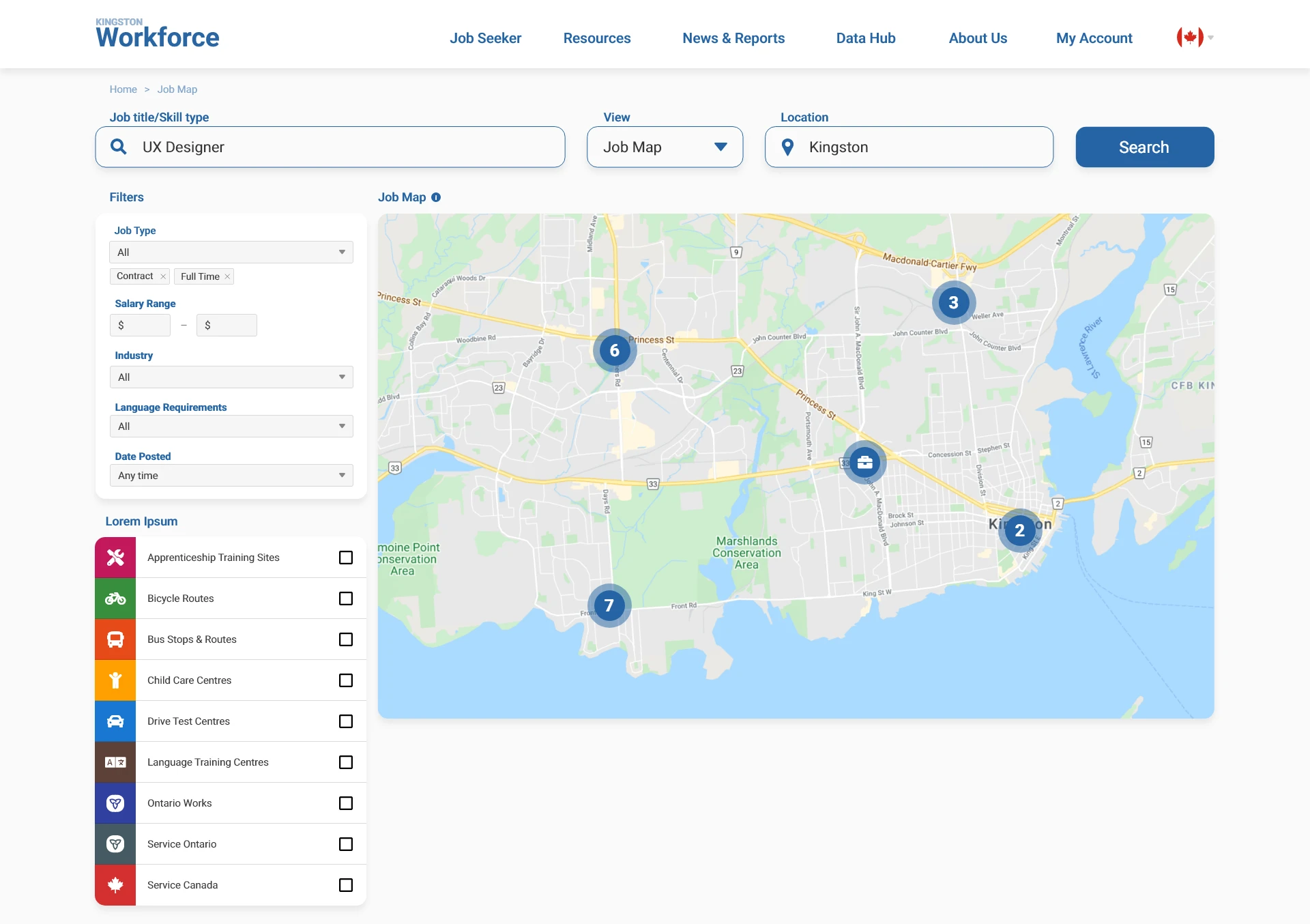
Job Board-Map View
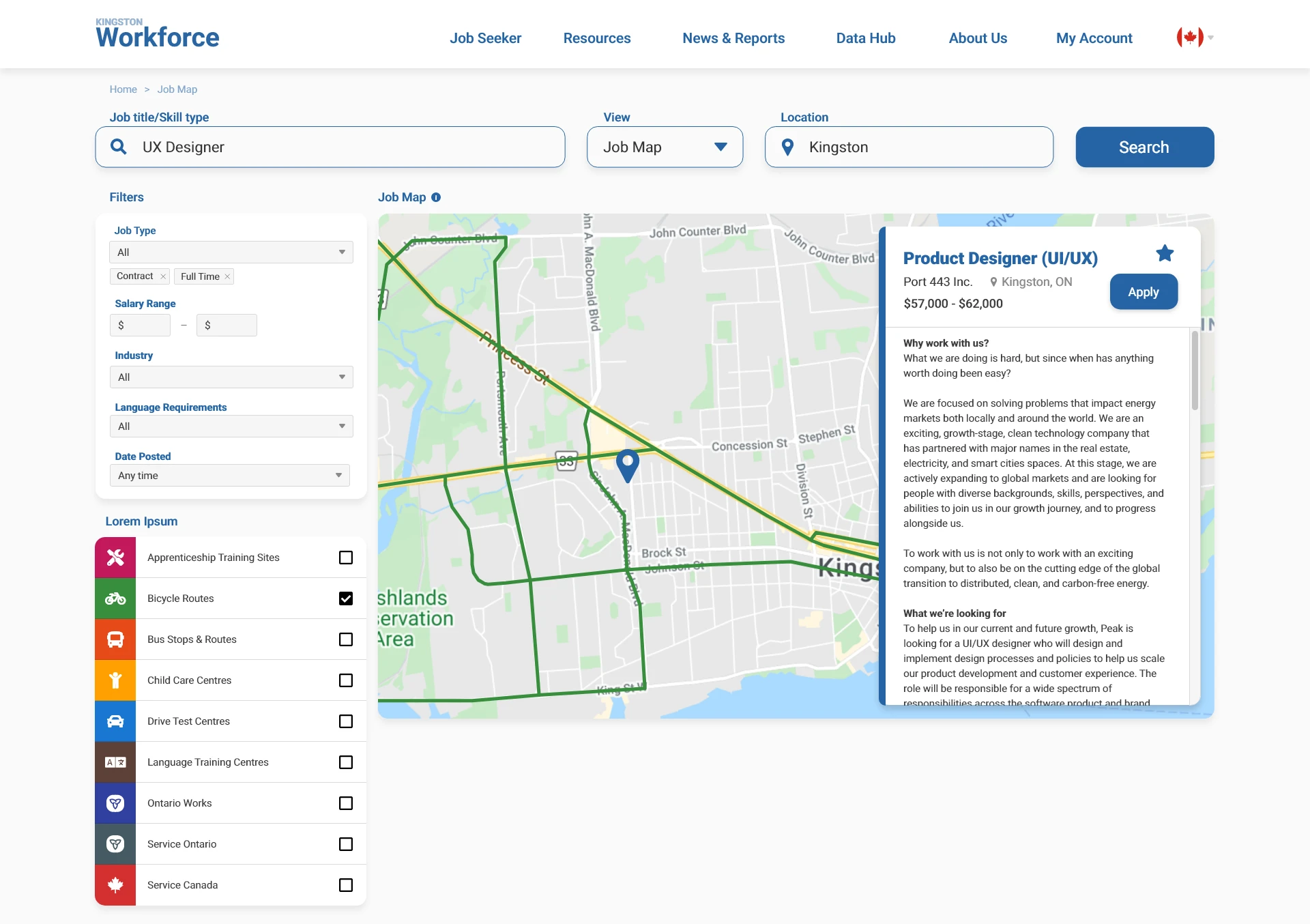
Job Board-Map View
Design Validation
Design Validation
A moderated, in-person usability test was conducted to validate the design decisions and functionality of the high-fidelity prototype before formal handover to the City of Kingston. This test confirmed the overall design direction and provided critical insights for final iterations.
Findings on the Career Path Page
Positive Reception: The prototype was generally well received, achieving an 87% task completion rate.
Key Design Insight: Participants expressed confusion regarding the initial design of the Career Path View, the page intended to recommend next-step or related job roles based on a user's current position.
Iteration & Solution: To align with users' mental models and make the feature more intuitive, the team iterated on the design. The final proposed Career Page utilized circles and lines to visually connect different potential career paths to the user's selected job title, making the transition possibilities straightforward and clear.
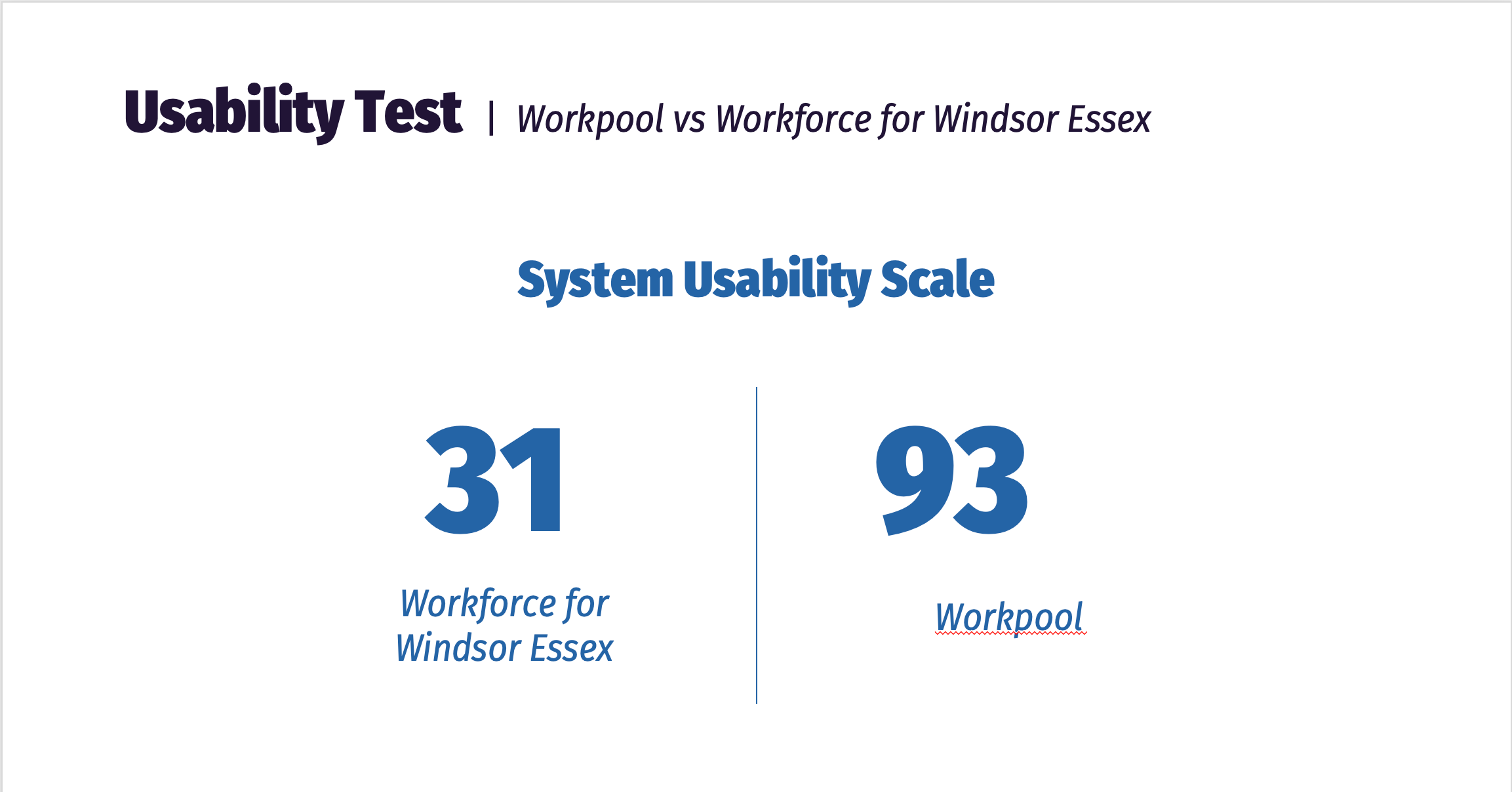
Before and After Usability Results
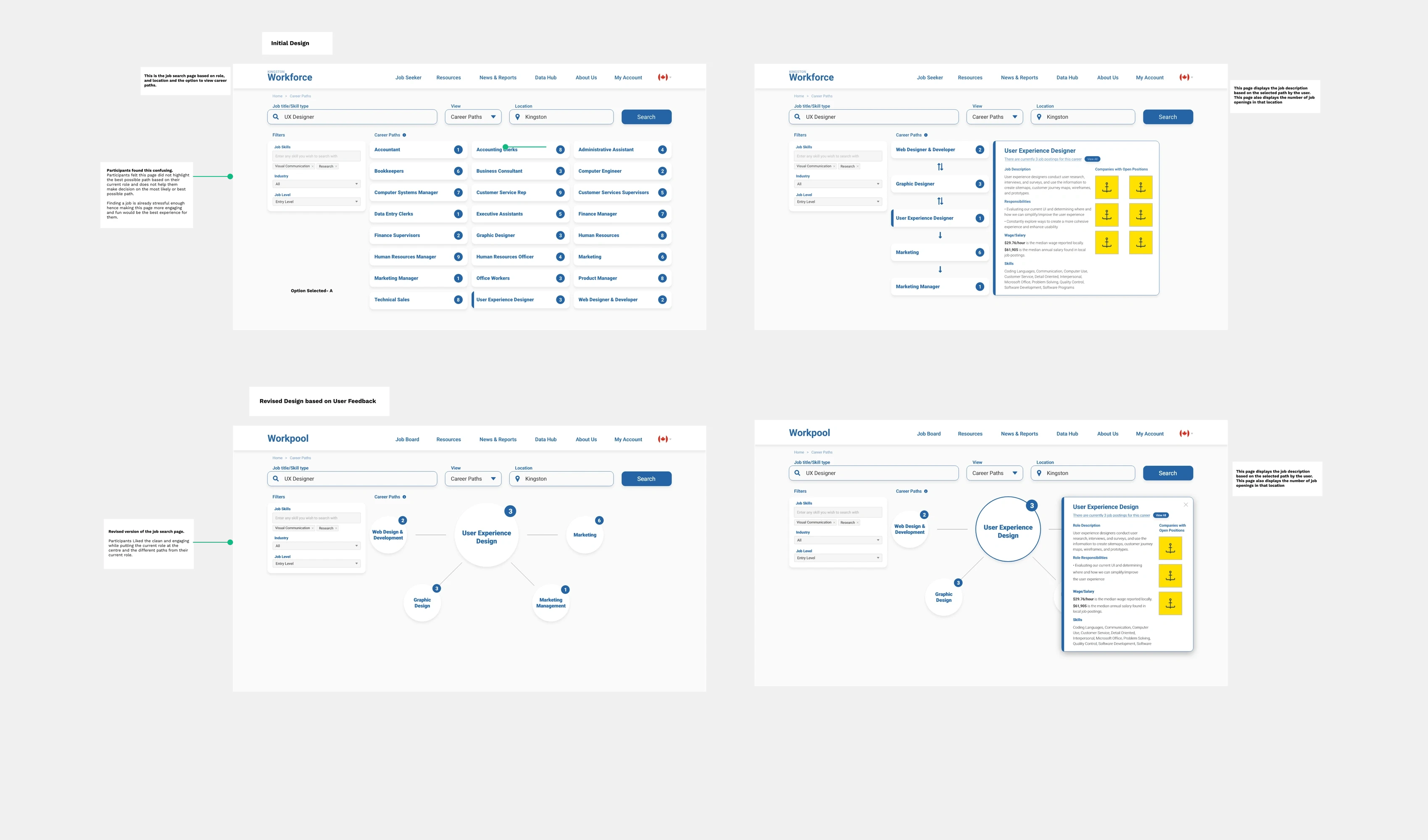
Design changes based on usability test results
Next Steps
The official development and launch of the job board platform by the City of Kingston.
Reflection
The project was a valuable experience that enhanced my information architecture skills, particularly through task analysis and strategic decision-making on content inventory and sitemap structure.
“ My interactions with the UX Program on this project have opened my eyes to the critical role of user experience and testing in government. ”
Craig Desjardins
Director of Strategy Innovation & Partnerships | The City of Kingston